
Sulfur hexafluoride (SF6) is a cornerstone of modern electrical infrastructure. Its superior insulation and arc-quenching make SF6 essential for GIS, breakers, and transformers.
However, SF6 leaks are hazardous because:
• They can displace oxygen and asphyxiate personnel in confined spaces.
• As an extremely potent greenhouse gas, they significantly harm the environment.
This dual risk makes reliable SF6 gas detection not just a safety measure but a critical environmental and operational imperative. At the heart of every effective monitoring system lies the SF6 sensor—a sophisticated device engineered to detect even trace amounts of this invisible hazard.
Understanding the Core Technology: How SF6 Sensors Work
An SF6 sensor functions by translating the physical presence of SF6 gas into a measurable electrical signal. Several advanced technologies are employed, each with distinct strengths tailored to different applications.
1. Non-Dispersive Infrared (NDIR) Sensors
NDIR is the most widely adopted and reliable technology for SF6 monitoring. It operates on the principle of infrared absorption. An infrared light source emits a specific wavelength that SF6 molecules strongly absorb (around 10.55 µm). As the light passes through a sampling chamber, SF6 gas present in the chamber absorbs some of this light. A detector measures the intensity of the remaining light, and the degree of attenuation is directly proportional to the SF6 concentration.
- Advantages: High selectivity (resistant to interference from other gases like CO2 or water vapor), long lifespan (often 5-10 years), excellent stability, and no sensor "poisoning". It provides a true concentration reading.
- Recent Innovation: A key challenge in NDIR design has been the trade-off between response time and stability, which is linked to the length of the sensor's gas cell. A breakthrough from researchers involves a dual gas cell NDIR system combined with a regression Kalman data fusion algorithm. This innovation achieves the fast response of a short gas cell while maintaining the high stability of a long one, improving response time by 20%—a critical advancement for rapid leak detection.
2. Photoacoustic Spectroscopy (PAS) Sensors
This highly sensitive method uses a laser tuned to an SF6 absorption line. The gas absorbs the laser energy, heats up, and expands, creating a pressure wave (sound) in a sealed chamber. A sensitive microphone detects this sound, and its amplitude indicates the gas concentration.
- Advantages: Extremely low detection limits, capable of reaching parts-per-billion (ppb) levels, making it ideal for ultra-trace background monitoring or research.
3. Other Detection Methods
- Ultrasonic Detection: Measures the change in the speed of sound in air, which is lowered by the presence of heavy SF6 molecules. It is simple and low-cost but has lower resolution and is more susceptible to environmental interference.
- Laser Spectroscopy & Hollow-Core Fiber Sensors: Advanced techniques like Tunable Diode Laser Absorption Spectroscopy (TDLAS) and novel mid-infrared hollow-core fiber sensors offer very high sensitivity and selectivity for specialized applications, including detecting SF6 decomposition products.
Key Applications: Where SF6 Sensors Are Indispensable
The primary mission of SF6 sensors is to ensure safety and prevent equipment failure across several industries.
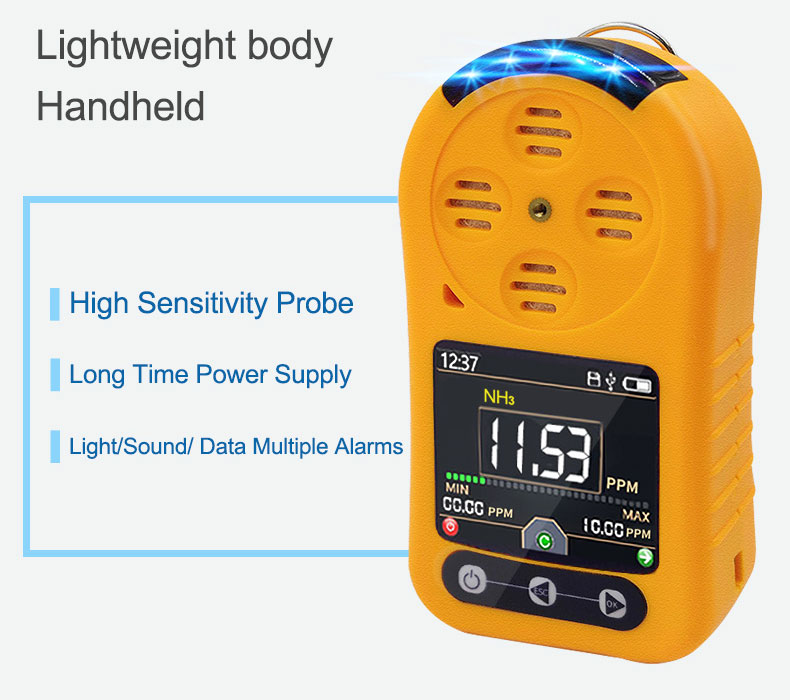
- Electric Power Transmission & Distribution: This is the largest application area. Fixed SF6 gas detectors are permanently installed in GIS rooms, switchgear chambers, and around circuit breakers in substations and power plants. They provide 24/7 continuous monitoring, triggering audible and visual alarms, and can automatically activate ventilation systems the moment a leak surpasses a safe threshold (e.g., 1000 ppm). Portable SF6 leak detectors are used by technicians for routine maintenance surveys and pinpointing the exact location of leaks.
- Industrial Manufacturing & Safety: SF6 is used in processes like magnesium alloy melting as a protective cover gas. Sensors are deployed in these industrial settings to protect workers from oxygen deficiency in case of a large leak and to ensure process integrity.
- Environmental Monitoring & Compliance: Due to its severe environmental impact, monitoring SF6 emissions is crucial. Sensors are used at manufacturing sites, in gas handling areas, and for regulatory compliance to track fugitive emissions and ensure proper recovery and recycling of the gas.

The Future of SF6 Sensing: Smarter, Smaller, and More Integrated
The evolution of SF6 sensor technology is driven by the demands of smarter grids and stricter environmental norms. Key trends include:
- Miniaturization & Cost Reduction: Advances like hollow-core fiber sensors aim to provide high sensitivity in more compact and cost-effective packages.
- IoT and Smart Networks: The shift towards wireless, networked sensors enables the creation of large-scale, cloud-based monitoring systems. This allows for predictive maintenance, data analytics, and centralized management of safety across multiple substations.
- Multi-Gas & Decomposition Monitoring: Advanced systems now integrate sensors to detect not only SF6 but also its decomposition products (like SO2, H2S) and oxygen levels, providing a complete diagnostic picture of equipment health and air quality.
Conclusion
From safeguarding the lives of electrical workers to protecting our planet's atmosphere, the SF6 sensor plays an indispensable role. By understanding the core technologies—from the robust NDIR to the cutting-edge photoacoustic and laser-based methods—and carefully selecting sensors based on application needs, industries can build robust defense systems against SF6 leakage. As technology converges with the Internet of Things, the future promises even more intelligent, connected, and comprehensive monitoring solutions, ensuring that our reliance on this powerful insulating gas does not come at an unacceptable cost.