
Introduction
Invisible, odorless, and often deadly, hazardous gases pose a constant threat across countless industries and living environments. From toxic fumes in a manufacturing plant to combustible gas leaks in a home, the ability to detect and measure these dangers is paramount for preventing injury, death, and catastrophic property damage. This is where the gas detector serves as an indispensable and often life-saving guardian. More than just an instrument, it is a critical component of personal and industrial safety systems, designed to provide early warning and critical data about atmospheric hazards. This article delves into the fundamental technologies, varied applications, and crucial selection criteria that define modern gas detection.
1. Core Sensing Technologies:
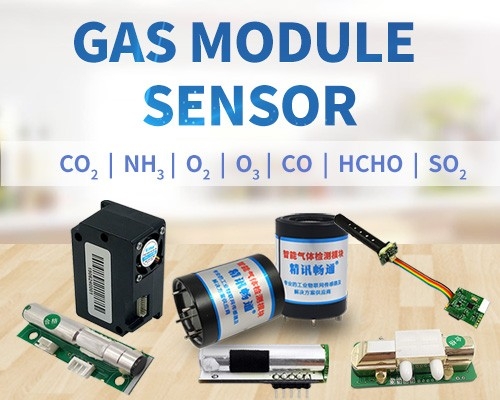
The performance, specificity, and suitability of a gas detector are fundamentally determined by its sensor technology. Each type operates on distinct physical or chemical principles, tailored for specific gas classes and environments.
- Electrochemical Sensors: The workhorse for detecting toxic gases like Carbon Monoxide (CO), Hydrogen Sulfide (H₂S), Nitrogen Dioxide (NO₂), and Oxygen (O₂) deficiency/enrichment. They operate on a fuel-cell-like principle: target gases undergo a chemical reaction at an electrode, generating a current proportional to their concentration. These sensors are prized for their high sensitivity to low concentrations (parts-per-million, ppm, range), good selectivity, and relatively low power consumption, making them ideal for portable personal safety monitors.
- Catalytic Combustion (Catalytic Bead) Sensors: The traditional and widely used method for detecting combustible gases like Methane (CH₄), Propane, and Hydrogen within their Lower Explosive Limit (LEL). They contain a heated catalyst bead. When a flammable gas is present, it combusts on the bead's surface, increasing its temperature and electrical resistance, which is measured to determine gas concentration. They are robust and provide a direct reading of explosion risk but can be poisoned or inhibited by certain chemicals like silicones or lead compounds.
- Infrared (IR) Sensors: These sensors, often Non-Dispersive Infrared (NDIR), detect gases like Carbon Dioxide (CO₂) and hydrocarbons by measuring the absorption of specific wavelengths of infrared light. They are highly selective, not susceptible to poisoning, do not require oxygen to operate, and offer stable long-term performance. They are commonly used for CO₂ monitoring in confined spaces and for leak detection of methane.
- Photoionization Detectors (PIDs): Essential for measuring low concentrations of a broad range of Volatile Organic Compounds (VOCs) and some toxic gases. A PID uses high-energy ultraviolet light to ionize gas molecules, producing a current proportional to concentration. It is a broad-spectrum detector (unable to distinguish between different VOCs) with exceptional sensitivity in the parts-per-billion (ppb) to ppm range, invaluable for leak detection, industrial hygiene, and hazardous materials response.
- Semiconductor (Metal Oxide) Sensors: Commonly found in lower-cost residential alarms for combustible gases. The sensor's electrical resistance changes when gas molecules adsorb onto a heated metal oxide surface. While sensitive and inexpensive, they can be less selective, more prone to false alarms from humidity or other vapors, and may drift over time.

2. Types and Form Factors: Matching the Tool to the Task
Gas detectors are designed in various form factors to suit different primary purposes.
- Portable Gas Detectors: These are handheld or wearable devices used for personal safety, leak searching, and confined space entry checks. They can be single-gas monitors (simple, dedicated) or multi-gas monitors (typically configured for 4-5 gases: O₂, LEL, H₂S, CO). They feature audible, visual, and vibrational alarms and are designed to be intrinsically safe for use in potentially explosive atmospheres.
- Fixed Gas Detection Systems: These are permanently installed systems consisting of one or multiple remote sensor heads strategically placed in areas of potential risk (e.g., near gas valves, in compressor stations, in tunnels). Sensors connect to a central control panel that provides continuous monitoring, data logging, and can trigger automatic responses like activating ventilation fans, shutting down processes, or initiating facility-wide alarms.
- Area Monitors: Larger, semi-portable units used to establish a safety perimeter during maintenance work, in emergency response scenarios, or in temporary work areas to protect a team of personnel.
3. Critical Applications Across Industries
The deployment of gas detectors is mandatory for safety in numerous sectors.
- Oil & Gas and Petrochemical: Monitoring for hydrocarbon leaks, H₂S in crude oil, and oxygen deficiency in confined spaces like tanks and offshore platforms.
- Utilities and Wastewater Treatment: Detecting combustible methane in sewers and manholes, as well as toxic gases like H₂S and CO.
- Mining: Primarily for monitoring CO, nitrogen oxides (from explosives), and oxygen levels to prevent asphyxiation and fire risks.
- Manufacturing and Chemical Plants: Detecting a wide array of process-specific toxic and combustible gases to protect workers and prevent incidents.
- Firefighting and Emergency Response (HAZMAT): Using portable multi-gas meters to assess atmospheric hazards post-fire or at chemical spill sites.
- Confined Space Entry: The paramount rule: continuous atmospheric testing (for O₂, LEL, and relevant toxics) is required before and during entry into any permit-required confined space.
4. Key Selection Criteria and Performance Factors
Choosing the correct gas detector requires careful analysis of several parameters:
- Target Gases: Precisely identify all potential hazards (combustible, toxic, asphyxiant).
- Required Range and Sensitivity: Determine necessary measurement ranges (percent LEL, ppm, or ppb).
- Environmental Conditions: Consider temperature, humidity, pressure, and the potential for sensor poisoning or interference from other gases.
- Intrinsic Safety Certification: For use in hazardous locations, the device must carry appropriate certifications (e.g., ATEX, IECEx, UL) proving it cannot ignite an explosive atmosphere.
- Durability and Ingress Protection (IP Rating): The housing must withstand the environment (dust, water, physical impact).
- Alarm Functionality: Clear, unmistakable audible and visual alarms are critical. Vibration is essential for high-noise environments.
- Data Logging and Connectivity: The ability to record exposure data for regulatory compliance and transfer it via Bluetooth or other wireless means for analysis.
- Battery Life and Maintenance: Long operational runtime and straightforward calibration/bump-test procedures are vital for reliability.
5. The Future of Gas Detection: Smarter and More Connected
The field is evolving towards greater intelligence and integration:
- IoT and Wireless Connectivity: Detectors are becoming nodes in the Industrial Internet of Things (IIoT), enabling real-time location tracking of workers, cloud-based data analytics, and centralized fleet management for calibration and maintenance.
- Improved Sensor Technology: Research focuses on more robust, selective, and longer-lasting sensors using new materials (e.g., laser-based, MEMS technology) to reduce false alarms and maintenance.
- Data Fusion and Predictive Analytics: Combining gas readings with other data (worker location, ventilation status) and using AI algorithms to predict potential hazard zones or equipment failures before they occur.
Conclusion
The gas detector is far more than a simple meter; it is a fundamental pillar of modern safety culture. By understanding the strengths and limitations of different sensor technologies—from the electrochemical cell for toxics to the catalytic bead for combustibles—safety professionals can deploy the right tool for the hazard. Whether ensuring a safe entry into a confined space, providing an early warning of an invisible leak, or protecting a worker's breathing zone, these devices deliver the critical information necessary to preserve life, health, and property. As technology advances, gas detectors will become increasingly intelligent and interconnected, forming the backbone of proactive, data-driven safety ecosystems for years to come.