
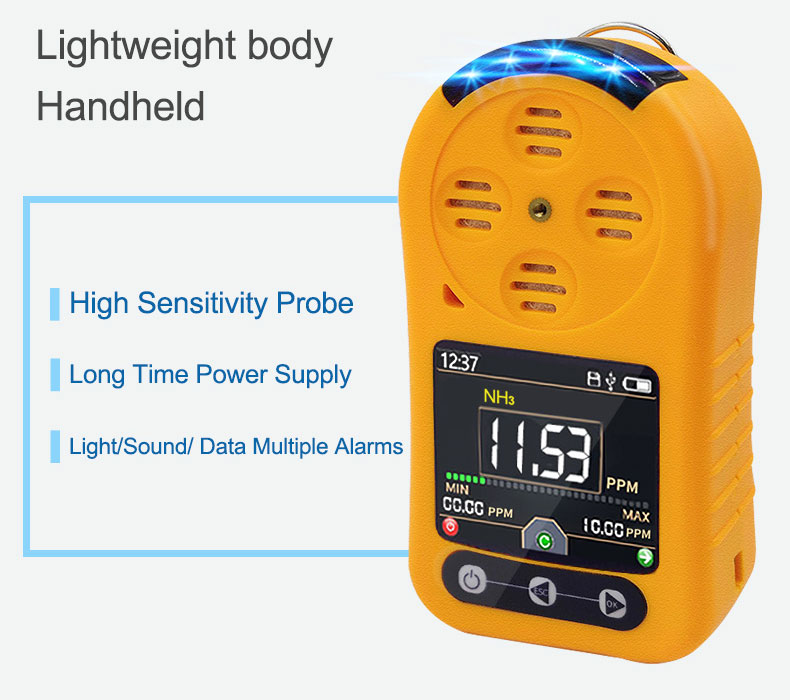
Portable gas detectors are critical instruments designed to detect and measure the concentration of hazardous gases in the air. They are a primary defense for personnel in hazardous environments and essential for environmental surveys and industrial safety compliance.
Core Working Principles and Technologies
The functionality of these devices hinges on specific sensor technologies, each tailored for different gas types and applications.
- For Combustible Gases (LEL Detection): Catalytic Bead (Pellistor) Sensors are the traditional and widely used method. They contain a catalytic element that oxidizes flammable gas, causing a temperature and resistance change proportional to the gas concentration. While robust, they can be poisoned by certain compounds. Infrared (IR) Sensors offer a non-contact alternative, measuring gas concentration by detecting the absorption of specific infrared wavelengths. They are immune to poisoning and excel in oxygen-deficient environments.
- For Toxic Gases: Electrochemical (EC) Sensors are the most common. They generate an electrical current directly proportional to the gas concentration through a chemical reaction at an electrode. They are highly sensitive and specific to gases like carbon monoxide (CO), hydrogen sulfide (H₂S), and oxygen (O₂) deficiency.
- For Volatile Organic Compounds (VOCs): Photoionization Detectors (PIDs) use high-energy ultraviolet light to ionize gas molecules, producing a current that indicates total VOC concentration. These detectors offer rapid response and broad detection capabilities, making them crucial for leak detection and industrial hygiene assessments.
Key Performance Parameters for Selection
Selecting the appropriate detector requires careful evaluation of these technical specifications:
- Target Gases: Clearly define the primary gases and potential interferents in the target environment.
- Detection Range and Resolution: Ensure the instrument's measurement span (from low ppm to percent levels) and its smallest readable concentration increment meet your needs.
- Response Time (T90): This indicates how quickly (usually in seconds) the sensor reads 90% of the actual gas concentration after exposure. Faster times are vital for personal safety alarms.
- Accuracy: Typically expressed as a percentage of the reading or full scale, this defines the maximum expected error of the measurement.
- Intrinsic Safety (IS) Rating: For use in potentially explosive atmospheres, the device must carry certifications (like ATEX, IECEx, UL) proving it cannot ignite the surrounding mixture.
Primary Application Scenarios
- Industrial Safety & Confined Space Entry:Required for pre-entry/continuous monitoring in confined spaces to ensure safe oxygen levels and no toxic/flammable gases.
- Leak Detection and Emission Control: Technicians use them to detect leaks from industrial equipment and ensure environmental compliance.
- Emergency Response and Hazmat Operations: First responders rely on them to identify gas threats during chemical spills, fires, or terrorist incidents to establish safe perimeters.
- Indoor Air Quality (IAQ) and Environmental Assessment: Used to evaluate CO₂, VOCs, and other pollutants in buildings, schools, and workplaces to ensure occupant health and comfort.
Operational Considerations and Best Practices
A detector's reliability depends on proper use and maintenance.
- Regular Bump Testing: Before each day's use, expose the sensors to a known concentration of gas to verify functional response. This is a critical, non-negotiable step for safety.
- Routine calibration using certified gas, as per guidelines, is essential to maintain accuracy.
- Battery and Sensor Management: Ensure the device is fully charged. Be aware of the limited operational lifespan (typically 2-3 years) of electrochemical and other consumable sensors and plan for timely replacement.
- Alarm Protocol: Operators must receive thorough training to evacuate immediately and follow safety procedures upon any alarm.
Modern portable gas detectors now integrate advanced features like multi-sensor arrays, data logging, and wireless connectivity for real-time monitoring, all housed in rugged designs for demanding field conditions. Effectively leveraging this technology for hazard prevention requires a solid understanding of their operational principles, specifications, and correct safety protocols.