
Introduction
Among various sensing technologies, the NDIR gas sensor module has emerged as a dominant and gold-standard solution for measuring gases like CO₂, CH₄, refrigerants, and many volatile organic compounds. NDIR sensors operate on a stable physical principle, unlike electrochemical cells, for precise and reliable detection. This article delves into the working principle, core components, key advantages, and expansive applications of the modern NDIR sensor module, highlighting why it is the preferred choice for an ever-widening array of smart systems.
1. Core Working Principle: Exploiting the Molecular Fingerprint
NDIR sensors elegantly apply the principles of infrared absorption spectroscopy.Each gas molecule has a unique set of absorption lines in the infrared spectrum—its "molecular fingerprint." An NDIR sensor exploits this by measuring the infrared light that the target gas absorbs at a specific wavelength.
The module operates by passing IR light through a gas sample and using a selective optical filter. Target gas molecules in the path absorb their specific wavelength, enabling detection.The detector measures the attenuated light intensity. The degree of attenuation, governed by the Beer-Lambert law, is directly proportional to the concentration of the target gas.
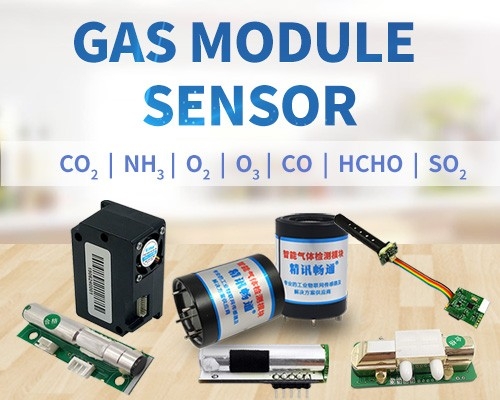
2. Anatomy of a Modern NDIR Module: Beyond Basic Components
Today's NDIR modules are highly integrated systems, evolving far beyond discrete optical benches.
- The Optical Core: This remains the heart. Advances like MEMS sources and specialized detectors enable smaller, lower-power modules. Sensitivity is enhanced by using reflective chambers to create longer optical paths for detecting trace gases.
- On-Board Intelligence: A modern module is not just a sensor; it is a smart subsystem. It incorporates a microcontroller that handles:
- Signal Processing: Converting raw detector signals into stable, calibrated concentration readings.
- Temperature & Pressure Compensation: Gas density and absorption characteristics change with environmental conditions. Integrated sensors provide data for real-time software compensation, ensuring accuracy in variable environments.
- Advanced Algorithms: Implementing diagnostic routines, baseline auto-calibration (ABC), and digital filtering to output clean, reliable data.
- Standardized Digital Interface: Featuring standard digital interfaces, the modules ensure plug-and-play compatibility with host systems, data loggers, and IoT platforms.
3. Key Advantages: Why NDIR is the Preferred Choice
The shift toward NDIR technology is driven by a compelling set of advantages over traditional sensing methods:
- Exceptional Selectivity & Specificity:
- The optical filter provides excellent immunity to cross-interference from other gases. A well-designed CO₂ NDIR sensor is virtually unaffected by the presence of moisture, carbon monoxide, or common VOCs.
- Long-Term Stability and Drift-Free Operation:
- Since the detection is a physical, non-consumptive process, NDIR sensors do not "wear out" like electrochemical cells. They exhibit minimal baseline drift, often operating reliably for 10-15 years without requiring recalibration.
- Fast Response Time:
- With no chemical reaction needed, NDIR modules can achieve response times (T90) in the range of seconds to tens of seconds, enabling real-time monitoring and control.
- Low Maintenance:
- The absence of consumables or electrolytes translates to virtually zero routine maintenance, significantly reducing the total cost of ownership.
- Robust Performance in Harsh Environments:
- They are well-suited for applications with high humidity, condensation, or corrosive background gases that would quickly degrade other sensor types.
4. Expansive Application Landscape
The robustness and reliability of NDIR modules have unlocked applications across industries:
Indoor Air Quality (IAQ) & HVAC: The primary application for CO₂ NDIR modules. They provide direct feedback on ventilation effectiveness in buildings, schools, and offices, enabling demand-controlled ventilation (DCV) systems that save energy while ensuring occupant health and comfort.
Industrial Safety & Process Control: Used to monitor for combustible gases (methane, hydrocarbons) in explosive environments and to control industrial processes where CO₂ or other gases are reactants or by-products.
Environmental Monitoring: Deployed in stationary stations and portable devices to measure greenhouse gases (CO₂, CH₄, N₂O) for climate research, landfill emission monitoring, and agricultural studies.
Automotive & Transportation: Monitoring cabin air quality and, critically, detecting refrigerant leaks (R-134a, R-1234yf) in automotive air conditioning systems with high precision.
Smart Agriculture & Controlled Environments: In greenhouses and vertical farms, precise CO₂ monitoring and enrichment are crucial for optimizing plant growth and yield.
Medical & Life Sciences: Incorporated into capnographs to monitor end-tidal CO₂ (ETCO₂), a vital sign during anesthesia and respiratory care.
5. Future Trends: Miniaturization, Multi-Gas, and Smart Integration
The development of NDIR modules aims to make the technology more accessible and versatile.
Further Miniaturization and Cost Reduction: Further MEMS progress paves the way for smaller, cheaper, and lower-power modules, ideal for consumer devices and dense sensor networks.
Multi-Gas Detection in a Single Module: Future integration will allow single-module multi-gas detection, providing comprehensive environmental analysis.
Enhanced Connectivity and IoT Readiness: Wireless connectivity will turn NDIR modules into seamless IoT edge nodes.
Conclusion
The NDIR gas sensor module represents the perfect convergence of fundamental physics, advanced optoelectronics, and intelligent digital design. With its unique blend of accuracy, stability, and robustness, the NDIR module is essential for critical gas monitoring.Through ongoing advancement, NDIR modules are becoming a vital, silent part of our connected infrastructure.