
Industrial environments are often fraught with potential hazards, especially in the form of toxic emissions. These emissions can pose severe threats to the health and safety of workers, as well as lead to environmental disasters. Advanced gas sensors have emerged as a game - changer in industrial safety monitoring, enabling real - time detection of toxic gases. This article explores the significance of real - time toxic emission detection, the evolution of advanced gas sensors, their working principles, applications in various industries, benefits, challenges, and future prospects.
Introduction
Industrial activities, such as chemical manufacturing, oil and gas refining, mining, and semiconductor production, generate a wide range of toxic gases. These gases, including carbon monoxide, hydrogen sulfide, ammonia, and volatile organic compounds (VOCs), can cause acute poisoning, chronic health problems, and even fatalities if not detected and controlled in a timely manner. Traditional methods of gas detection often have limitations in terms of response time, accuracy, and reliability. Advanced gas sensors, however, offer a more efficient and effective solution by providing real - time data on toxic emissions, allowing for immediate action to be taken to mitigate risks.
The Importance of Real - Time Toxic Emission Detection
1. Worker Safety
The primary concern in any industrial setting is the safety of the workforce. Real - time detection of toxic gases enables workers to be alerted immediately when gas levels exceed safe limits. This allows them to evacuate the area promptly, put on protective equipment, or take other necessary safety measures. For example, in a chemical plant, a sudden leak of hydrogen sulfide can be fatal within minutes. Advanced gas sensors can detect the presence of this gas almost instantly, giving workers the precious time they need to protect themselves.
2. Environmental Protection
Industrial toxic emissions can also have a significant impact on the surrounding environment. Gases like sulfur dioxide and nitrogen oxides contribute to air pollution, acid rain, and global warming. Real - time monitoring allows industries to control their emissions more effectively, reducing their environmental footprint. By detecting and addressing leaks promptly, industries can prevent the release of large amounts of toxic gases into the atmosphere, protecting ecosystems and public health.
3. Compliance with Regulations
Governments around the world have strict regulations in place regarding industrial toxic emissions. Real - time gas detection systems help industries comply with these regulations by providing accurate and continuous data on gas levels. This data can be used to demonstrate compliance during audits and inspections, avoiding potential fines and legal issues.
Evolution of Advanced Gas Sensors
1. Early Gas Sensors
Early gas sensors were often based on simple chemical reactions or physical properties of gases. For example, catalytic bead sensors were used to detect combustible gases by measuring the change in resistance caused by the oxidation of the gas on the sensor's surface. However, these sensors had limitations such as poor selectivity, slow response times, and susceptibility to poisoning by other substances.
2. Electrochemical Sensors
Electrochemical sensors represent a significant advancement in gas detection technology. They work based on the principle of electrochemical reactions between the target gas and the electrodes in the sensor. These sensors offer high sensitivity, good selectivity, and relatively fast response times. They are widely used for detecting a variety of toxic gases, including carbon monoxide, hydrogen sulfide, and chlorine.
3. Optical Sensors
Optical gas sensors use the interaction of light with gases to detect their presence and concentration. Techniques such as infrared absorption spectroscopy and laser - based sensors are commonly employed. Optical sensors have the advantage of being highly selective, non - intrusive, and capable of detecting gases over long distances. They are particularly useful in applications where remote monitoring is required, such as in large industrial facilities or hazardous areas.
4. Semiconductor Sensors
Semiconductor gas sensors are based on the change in electrical conductivity of a semiconductor material when exposed to a target gas. These sensors are relatively inexpensive, small in size, and have a fast response time. However, they can be affected by changes in temperature and humidity, and their selectivity is often limited.
5. Advanced Composite Sensors
The latest development in gas sensor technology is the use of advanced composite sensors. These sensors combine the advantages of different sensor types, such as electrochemical, optical, and semiconductor sensors, to achieve higher sensitivity, better selectivity, and greater reliability. For example, a composite sensor may use an electrochemical sensor for initial detection and an optical sensor for confirmation and more accurate quantification of the gas concentration.
Working Principles of Advanced Gas Sensors
1. Electrochemical Sensors
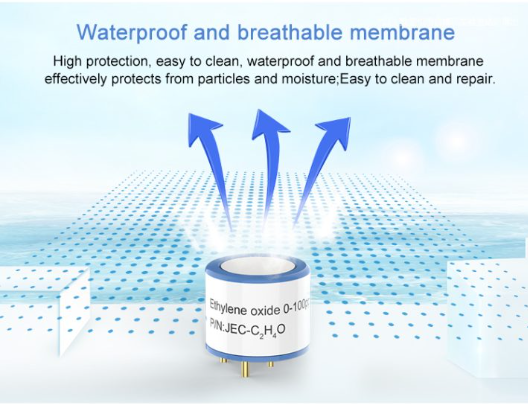
In an electrochemical sensor, the target gas diffuses through a porous membrane and reaches the working electrode. At the working electrode, the gas undergoes an oxidation or reduction reaction, generating a flow of electrons. This electron flow creates an electrical current that is proportional to the concentration of the gas. The reference electrode provides a stable potential, and the counter electrode completes the electrical circuit. The sensor's output signal is then processed and displayed as a gas concentration value.
2. Optical Sensors
Optical sensors typically use a light source, such as an infrared laser or a light - emitting diode (LED), to emit light at a specific wavelength that is absorbed by the target gas. The amount of light absorbed is proportional to the concentration of the gas. A detector measures the intensity of the transmitted or reflected light, and the gas concentration is calculated based on the Beer - Lambert law. Some optical sensors also use multiple wavelengths or advanced signal - processing algorithms to improve selectivity and accuracy.
3. Semiconductor Sensors
Semiconductor sensors consist of a semiconductor material, such as tin dioxide (SnO₂), that is coated with a catalyst. When the target gas comes into contact with the sensor surface, it reacts with the catalyst, causing a change in the electrical conductivity of the semiconductor material. This change in conductivity is measured and converted into a gas concentration value. The sensor's sensitivity can be adjusted by changing the operating temperature or the composition of the semiconductor material.
Applications in Various Industries
1. Chemical Industry
In the chemical industry, advanced gas sensors are used to monitor the production and storage of toxic chemicals. For example, in a chlorine production plant, sensors are installed to detect any leaks of chlorine gas, which is highly toxic and corrosive. Real - time detection allows for immediate shutdown of the production process and evacuation of the area, preventing serious accidents.
2. Oil and Gas Industry
The oil and gas industry involves various processes, such as drilling, refining, and transportation, that can generate toxic gases. Gas sensors are used to monitor for the presence of hydrogen sulfide, which is commonly found in crude oil and natural gas. Hydrogen sulfide is extremely toxic and can cause respiratory failure and even death at high concentrations. Sensors are also used to detect methane leaks, which are a major contributor to greenhouse gas emissions.
3. Mining Industry
In underground mines, toxic gases such as carbon monoxide, methane, and nitrogen dioxide can accumulate due to mining activities and ventilation problems. Advanced gas sensors are installed in mines to continuously monitor gas levels and alert miners to potential dangers. This helps to prevent mine explosions and other accidents caused by gas buildup.
4. Semiconductor Manufacturing
Semiconductor manufacturing processes use a variety of toxic and hazardous gases, such as silane, phosphine, and arsine. Gas sensors are essential for ensuring the safety of workers and the quality of the manufacturing process. Real - time detection of gas leaks allows for immediate corrective action, preventing damage to equipment and contamination of the semiconductor products.
Benefits of Advanced Gas Sensors
1. Early Warning
One of the most significant benefits of advanced gas sensors is their ability to provide early warning of toxic gas leaks. This allows for prompt evacuation of personnel and implementation of emergency procedures, reducing the risk of injuries and fatalities.
2. Improved Safety Culture
The use of advanced gas sensors promotes a culture of safety in industrial facilities. Workers are more aware of the potential hazards and are more likely to follow safety protocols when they know that gas levels are being continuously monitored.
3. Cost Savings
By preventing accidents and reducing downtime, advanced gas sensors can lead to significant cost savings for industries. The cost of installing and maintaining gas detection systems is often far outweighed by the potential costs of an accident, such as medical expenses, legal fees, and lost production.
4. Data - Driven Decision Making
Advanced gas sensors generate a wealth of data on gas levels and emission patterns. This data can be analyzed to identify trends, optimize processes, and improve overall safety and environmental performance. For example, by analyzing gas emission data, industries can identify the sources of leaks and take steps to prevent them in the future.
Challenges and Limitations
1. Interference
Gas sensors can be affected by interference from other gases, dust, humidity, and temperature variations. This can lead to false alarms or inaccurate readings. Advanced sensor designs and signal - processing algorithms are being developed to minimize interference and improve sensor performance.
2. Calibration and Maintenance
Gas sensors require regular calibration and maintenance to ensure their accuracy and reliability. Calibration involves exposing the sensor to a known concentration of the target gas and adjusting the sensor's output accordingly. Maintenance includes cleaning the sensor, replacing worn - out parts, and checking for any signs of damage. The cost and complexity of calibration and maintenance can be a challenge for some industries.
3. Cost
While the cost of advanced gas sensors has decreased in recent years, they can still be relatively expensive, especially for small and medium - sized enterprises. The initial investment in gas detection systems, including sensors, controllers, and alarm systems, can be a barrier to adoption.
Future Prospects
1. Integration with IoT and Big Data
The future of gas sensor technology lies in its integration with the Internet of Things (IoT) and big data analytics. By connecting gas sensors to the IoT, data can be collected and transmitted in real - time to a central monitoring system. Big data analytics can then be used to analyze the data, identify patterns, and predict potential gas leaks or safety hazards.
2. Miniaturization and Portability
There is a growing demand for miniaturized and portable gas sensors that can be used in a variety of applications, such as personal protective equipment, drones, and handheld devices. Advances in microelectronics and nanotechnology are enabling the development of smaller, more sensitive, and more energy - efficient gas sensors.
3. Multi - Gas Detection
Future gas sensors are likely to be capable of detecting multiple gases simultaneously. This will provide a more comprehensive view of the gas environment in industrial facilities, allowing for better risk assessment and management.
Conclusion
Advanced gas sensors have revolutionized industrial safety monitoring by enabling real - time detection of toxic emissions. Their ability to provide early warning, improve safety culture, and lead to cost savings makes them an essential tool in various industries. While there are still challenges and limitations to overcome, such as interference, calibration, and cost, the future prospects of gas sensor technology are promising. With the integration of IoT, big data analytics, miniaturization, and multi - gas detection capabilities, advanced gas sensors will continue to play a crucial role in ensuring the safety of workers and the environment in industrial settings.